When homeowners or property owners hear the term general contractor, they may wonder exactly what that means.
Does a general contractor build the entire project?
Who hires the electrician?
Who coordinates the plumber?
Who orders materials?
Who handles inspections?
Who manages the schedule?
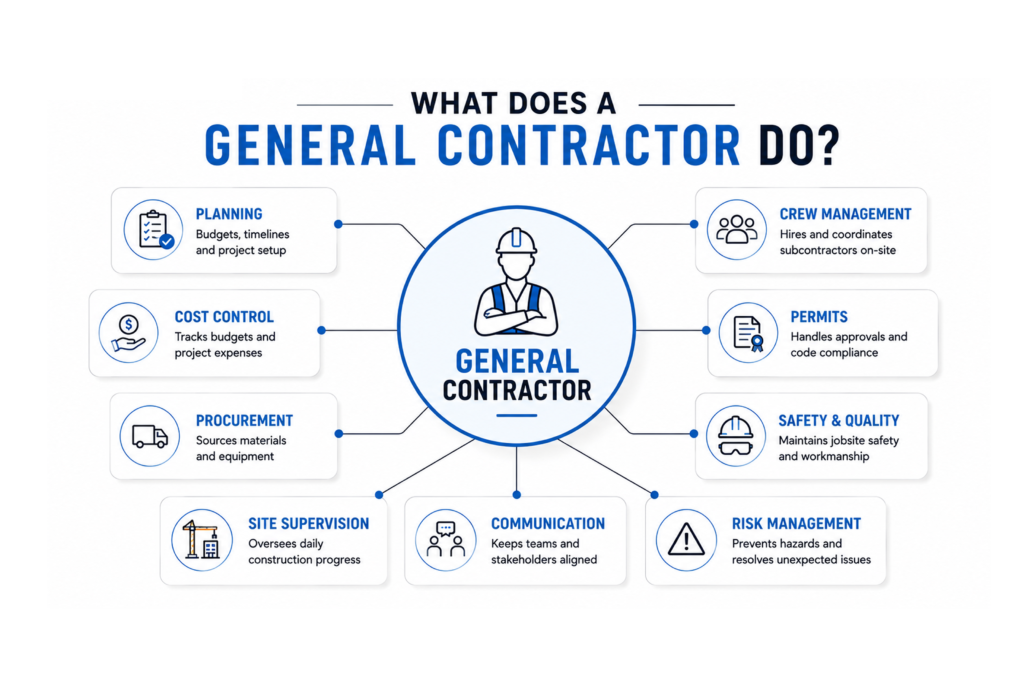
In a full-service construction project, the general contractor serves as the central point of coordination for the work.
The exact responsibilities vary by contract, but a general contractor may manage many of the moving parts required to take a project from plans to completion.
What Does a General Contractor Do?
A general contractor coordinates the construction process.
Depending on the project, this can include:
- Reviewing plans
- Developing estimates
- Scheduling work
- Hiring and coordinating subcontractors
- Ordering materials
- Managing the job site
- Coordinating inspections
- Communicating with the owner
- Managing changes
- Monitoring progress
- Coordinating final completion
The contractor isn’t necessarily performing every trade personally.
Instead, the contractor manages the project as a whole.
1. Pre-Construction Planning
A successful project starts before workers arrive on site.
Pre-construction services may include reviewing architectural plans, evaluating the site, developing budgets, identifying potential construction challenges, and establishing a preliminary schedule.
This stage can uncover problems while they’re still relatively easy to solve.
For example, a contractor may identify a potential material lead-time problem before it affects the construction schedule.
2. Construction Estimating
A general contractor can develop a detailed estimate based on the project plans and specifications.
The estimate may account for:
- Labor
- Materials
- Equipment
- Subcontractors
- Site work
- Permits
- Project management
- Other project-specific costs
A detailed estimate helps the owner understand where money is being spent.
It also establishes a basis for comparing the actual project scope with the available budget.
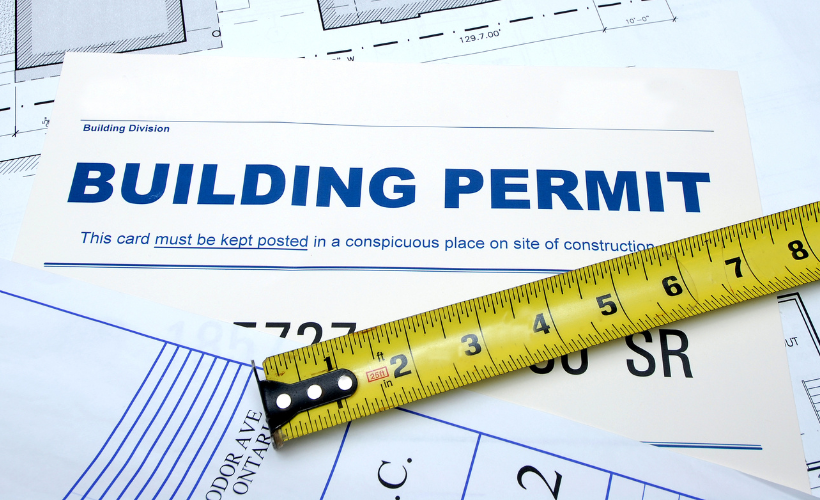
3. Permitting and Approvals
The contractor may help coordinate the permitting process, depending on the project and local requirements.
This can involve gathering documentation, submitting information, scheduling inspections, and responding to requirements from the relevant authorities.
Permit responsibilities should always be clearly defined in the construction contract.
4. Site Preparation
Before the building itself can be constructed, the property may require site work.
This could include:
- Clearing
- Demolition
- Excavation
- Grading
- Drainage
- Utility work
- Foundation preparation
- Access improvements
The scope depends heavily on the property.
5. Foundation Construction
The foundation is a critical component of any building.
Depending on the project, construction may include excavation, footings, reinforcement, concrete, foundation walls, waterproofing, drainage, and backfilling.
A general contractor coordinates the necessary trades and inspections to keep the foundation stage moving.
6. Structural Construction
Once the foundation is ready, the project moves into structural construction.
This may include:
- Framing
- Structural steel
- Floor systems
- Roof structures
- Structural connections
- Exterior sheathing
The exact scope depends on the design.
7. Exterior Construction
The contractor may coordinate the building envelope, including:
- Roofing
- Windows
- Exterior doors
- Siding
- Masonry
- Waterproofing
- Exterior insulation
A properly coordinated exterior is essential for protecting the building from weather.
8. Plumbing, Electrical, and HVAC
Specialized subcontractors are commonly involved in mechanical and electrical work.
The general contractor coordinates their schedules and ensures their work fits within the overall construction sequence.
This coordination is important because different systems often occupy the same spaces.
For example, electrical wiring, plumbing pipes, and HVAC ductwork may all need to pass through walls and ceilings.
9. Interior Construction
Interior work can include:
- Insulation
- Drywall
- Flooring
- Cabinets
- Countertops
- Tile
- Interior doors
- Trim
- Painting
- Lighting
- Plumbing fixtures
Each trade must be scheduled at the appropriate stage.
Installing flooring before other heavy construction is complete, for example, can lead to unnecessary damage.
10. Material Procurement
Material ordering is another important part of construction management.
Some materials are readily available.
Others can require significant lead time.
A contractor may need to coordinate the ordering and delivery of:
- Windows
- Doors
- Cabinets
- Flooring
- Tile
- Appliances
- Plumbing fixtures
- Lighting
- Specialty materials
Good procurement planning can prevent materials from becoming the reason a project stops.
11. Subcontractor Management
A typical construction project can involve numerous specialized companies and trades.
The general contractor coordinates these subcontractors and helps establish the sequence in which they work.
This includes scheduling, communication, site coordination, and addressing conflicts.
The goal is to make many independent pieces function as one construction project.
12. Job-Site Management
A full-service contractor also manages the construction environment.
This can include:
- Scheduling deliveries
- Coordinating workers
- Managing site access
- Maintaining organization
- Addressing construction issues
- Coordinating inspections
- Monitoring progress
Good site management helps improve safety, efficiency, and productivity.
13. Quality Control
Quality control should continue throughout the project rather than only at the end.
The contractor should monitor workmanship and address issues as they are identified.
Catching a problem early is generally easier than discovering it after subsequent work has covered it.
For example, correcting an issue before drywall installation is usually easier than opening finished walls later.
14. Change Management
Construction projects sometimes change.
The owner may want a different finish.
An existing condition may require a design adjustment.
A material may become unavailable.
A structural issue may be discovered.
A professional contractor documents these changes and explains their effect on cost and schedule.
This protects both the contractor and the owner from misunderstandings.
15. Inspections and Final Completion
The contractor can coordinate required inspections throughout the project.
Near completion, the team may also coordinate:
- Final inspections
- Punch-list work
- Corrections
- Cleaning
- Testing
- Final installations
- Documentation
- Handover
The goal is to deliver a completed project that matches the agreed scope as closely as possible.
Why Use a Full-Service General Contractor?
The biggest advantage is coordination.
Instead of the property owner separately managing a plumber, electrician, framer, roofer, painter, flooring installer, and dozens of other tasks, the general contractor serves as the central project manager.
That can simplify communication and reduce the burden on the owner.
What Should Be Included in Your Contract?
Never assume that “full service” means exactly the same thing from one contractor to another.
Ask for a written scope that explains:
- What work is included
- Which materials are included
- Which subcontractors are included
- What permits are included
- What the owner must provide
- What is excluded
- How changes are handled
- How payments are structured
- What warranty applies
The contract should be specific enough that both parties understand their responsibilities.
General Construction Services vs. Hiring Individual Trades
For a small project, hiring individual trades directly may sometimes make sense.
For a large construction project, however, coordinating multiple trades yourself can become a substantial management responsibility.
A general contractor can provide a single point of contact and coordinate the overall sequence.
This can be particularly valuable for:
- New home construction
- Large additions
- Whole-house renovations
- Major structural renovations
- Complex commercial projects
Final Thoughts
A full-service general contractor is essentially responsible for making the many pieces of a construction project work together.
From planning and estimating through site work, subcontractor coordination, materials, inspections, and final completion, the contractor helps turn a set of plans into a finished building.
The exact services included will depend on the project and contract, so always review the scope carefully before construction begins.
If you’re planning a construction project, choosing a contractor who can provide strong communication, detailed planning, reliable subcontractor coordination, and transparent project management can make the entire process significantly easier.
Planning a new build, addition, or major renovation? Contact our team to learn more about our general construction services and how we can help manage your project from planning through completion.